Cost guide
How much do solar panels cost in the UK?
A plain-English guide to what UK homeowners typically pay for solar panels — and how to spot a quote that genuinely reflects your home.
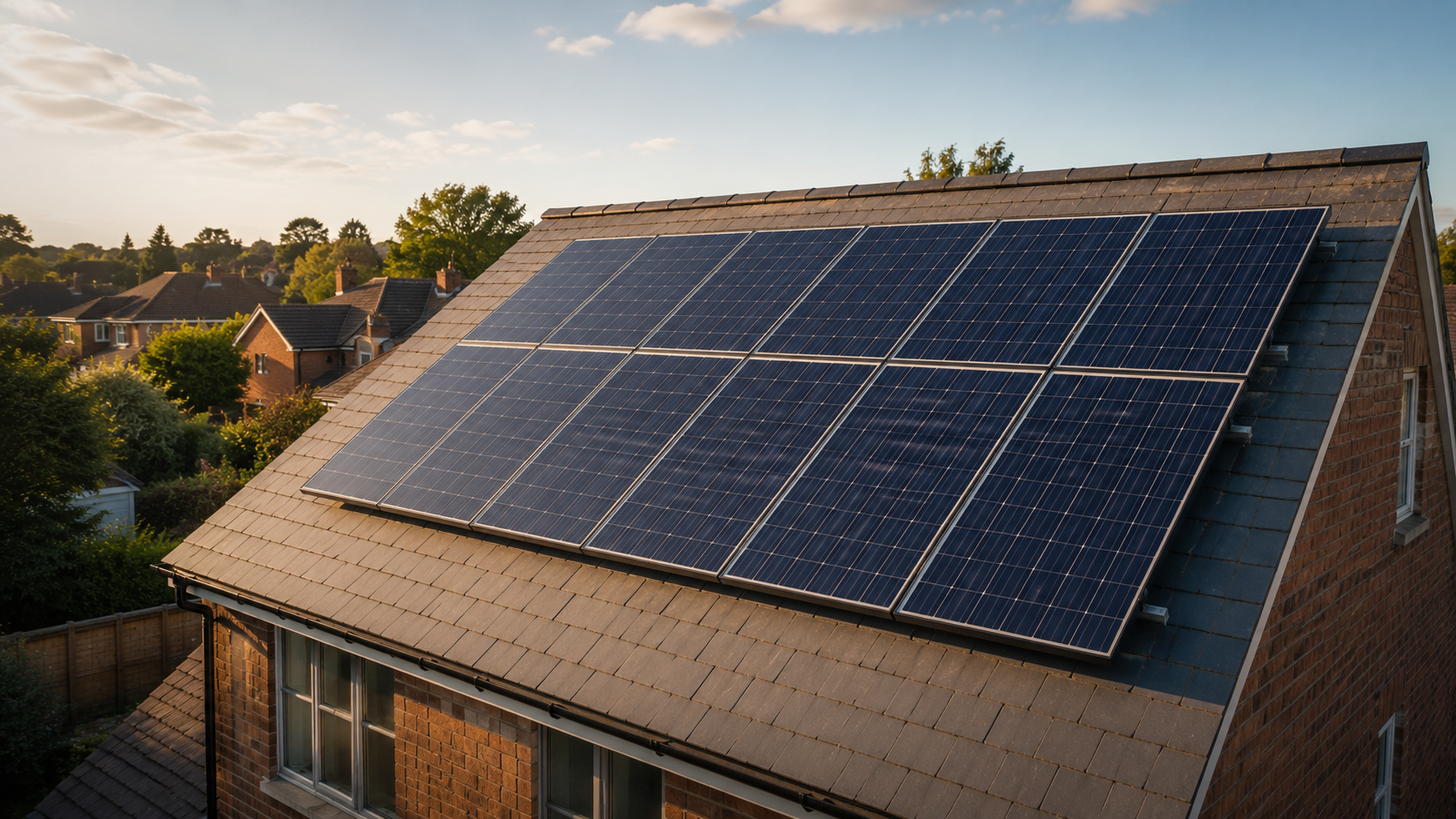
Typical solar panel costs
A typical UK domestic solar system costs around £6,000–£10,000 installed. This usually covers panels, an inverter, mounting, electrical work, paperwork, and a basic monitoring setup.
Smaller systems for flats or bungalows can come in cheaper; larger systems with premium panels, micro-inverters, or batteries can be significantly more. These figures are illustrative — your written quote is what counts.
£6–10k
Typical installed system
5–7 yrs
Common payback range
25+ yrs
Panel performance warranty
0% VAT
On most domestic installs
What affects the price
Six common factors that move the headline cost up or down.
System size
A 4 kWp system is cheaper than a 10 kWp system, but bigger systems are often better value per kilowatt installed.
Panel and inverter brand
Premium panels and micro-inverters add cost — sometimes meaningfully more output, sometimes just a longer warranty.
Roof type and access
Slate, multi-pitched, or hard-to-access roofs need more labour. Scaffolding is usually included.
Electrical work
Fuse-board upgrades, cable runs, or G99 applications add cost in some homes.
Battery storage
Adding a battery typically adds £3,000–£8,000 depending on size and brand. See our battery cost guide.
Region and supply
Local installer availability, demand, and travel can move prices a few hundred pounds in either direction.
Solar only vs solar + battery
Adding a battery costs more upfront but can shorten payback if your usage suits it.
| Option | Typical installed cost | Best for |
|---|---|---|
| Solar only | £6–10k | Lower upfront cost; daytime usage homes |
| Solar + small battery | £9–14k | Most UK homes — balances upfront cost and self-consumption |
| Solar + larger battery | £12–18k | High evening usage, EV owners, or backup-focused households |
Payback period
Most UK domestic solar systems pay back in 5–10 years. Well-sized systems on homes with daytime usage typically land at the lower end of that range.
Adding a battery usually extends payback slightly in pure financial terms but improves the long-term return because you keep more of what your panels generate.
- Use the daytime — faster payback
- South, east, or west-facing roof
- Limited shading throughout the day
- Smart tariff that rewards self-consumption
- Plans to stay in the home long term
How to compare quotes
A clear quote should let you compare like-for-like across installers. Look for these line items.
Equipment, named
Exact panel make/model, inverter, battery (if any), and mounting kit — not "premium panels".
All labour and access
Scaffolding, electrical work, fuse-board upgrades, and commissioning included in the headline price.
Warranty terms in writing
Length and scope of product, performance, and workmanship cover — including any insurance-backed guarantee.
MCS & certifications
If MCS applies, the installing company is listed with their MCS number and the relevant consumer code.
Expected generation
A realistic kWh-per-year figure for your roof, not just system size in kWp.
Payment schedule
When deposits are due, what milestones trigger further payments, and what happens if you cancel.
Ready to Switch to Solar?
Get your free savings estimate in under 60 seconds. No obligation, no sales pitch.