Cost guide
How much does home battery storage cost?
What UK homeowners typically pay for battery storage — with or without solar — and how to decide whether it’s worth it for your home.
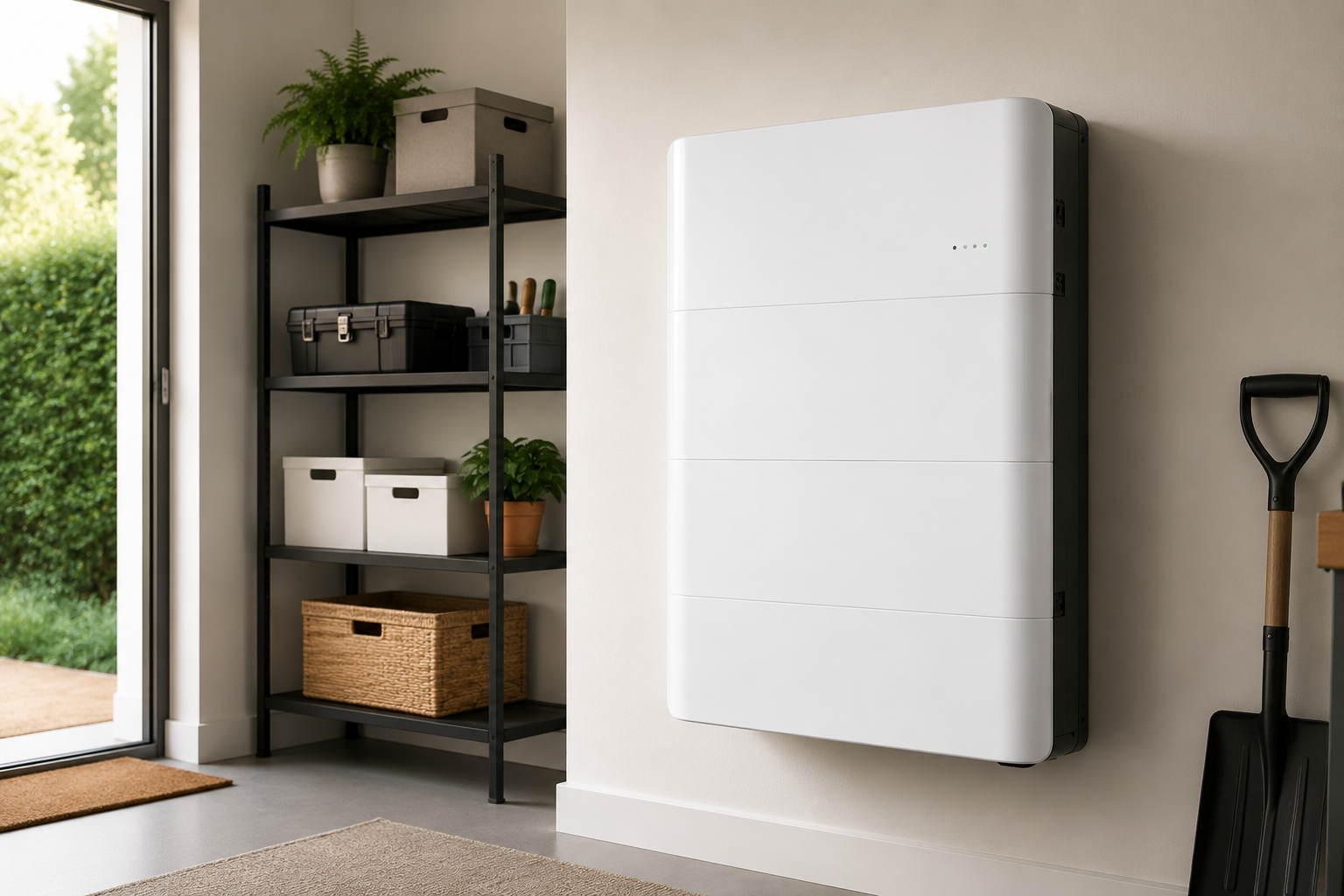
Battery storage cost factors
Six factors that most affect the price of a UK home battery install.
Usable capacity (kWh)
The single biggest driver. More capacity = more upfront cost, but also more savings per cycle.
AC vs DC coupling
AC-coupled batteries are easier to retrofit; DC-coupled batteries paired with new solar can be slightly more efficient.
Brand and warranty
Premium brands carry a price premium — sometimes for longer warranty, sometimes for the badge.
Backup capability
Backup-ready batteries with critical-load circuits cost more than standard load-shifting batteries.
Installation complexity
Long cable runs, multiple stacks, fuse-board upgrades, or unusual mounting positions add labour cost.
Grid paperwork
G98/G99 DNO applications are usually handled by your installer but add to the overall project timeline.
Battery size: what fits your home?
Illustrative bands for installed costs in the UK in 2026 — your written quote is what counts.
| Usable size | Typical installed cost | Best for |
|---|---|---|
| Small (5–6 kWh) | £3–5k | Smaller homes, light evening use, top-up storage |
| Medium (8–10 kWh) | £5–7k | Most UK households — balances cost and self-consumption |
| Large (12–15+ kWh) | £7–10k | High-usage homes, EV owners, or homes wanting backup |
Brand comparison (educational)
Energy Badger is brand-independent. Installers in our network can quote a range of leading home battery systems, so you can compare like for like before committing.
Brand availability depends on installer, property, and stock. Your written quote names the exact models.
Solar charging vs grid charging
Where the battery’s energy comes from affects how quickly it pays back.
Charging from solar
Free energy from your panels gets stored for evening use. Particularly valuable when SEG export rates are low.
Best for: homes that generate significant solar but use most of their electricity outside daylight hours.
Charging from the grid
Top up the battery during cheap off-peak periods, use it when peak rates kick in. Needs a compatible smart tariff.
Best for: homes without solar, or homes with solar that have high evening usage all year round.
Is battery storage worth it?
For most UK homes with solar or a smart tariff, a sensibly-sized battery is worth it — especially as energy prices stay volatile.
But it’s not for everyone. Homes with low evening usage and standard flat-rate tariffs may struggle to recoup the cost. Use our estimator to model your specific situation.
- You already have or are getting solar
- You use most of your electricity in the evening
- You’re on a smart or time-of-use tariff
- You want some backup during outages
- You plan to add an EV charger soon
Ready to Switch to Solar?
Get your free savings estimate in under 60 seconds. No obligation, no sales pitch.